
Springtime and Terroir on the Farm
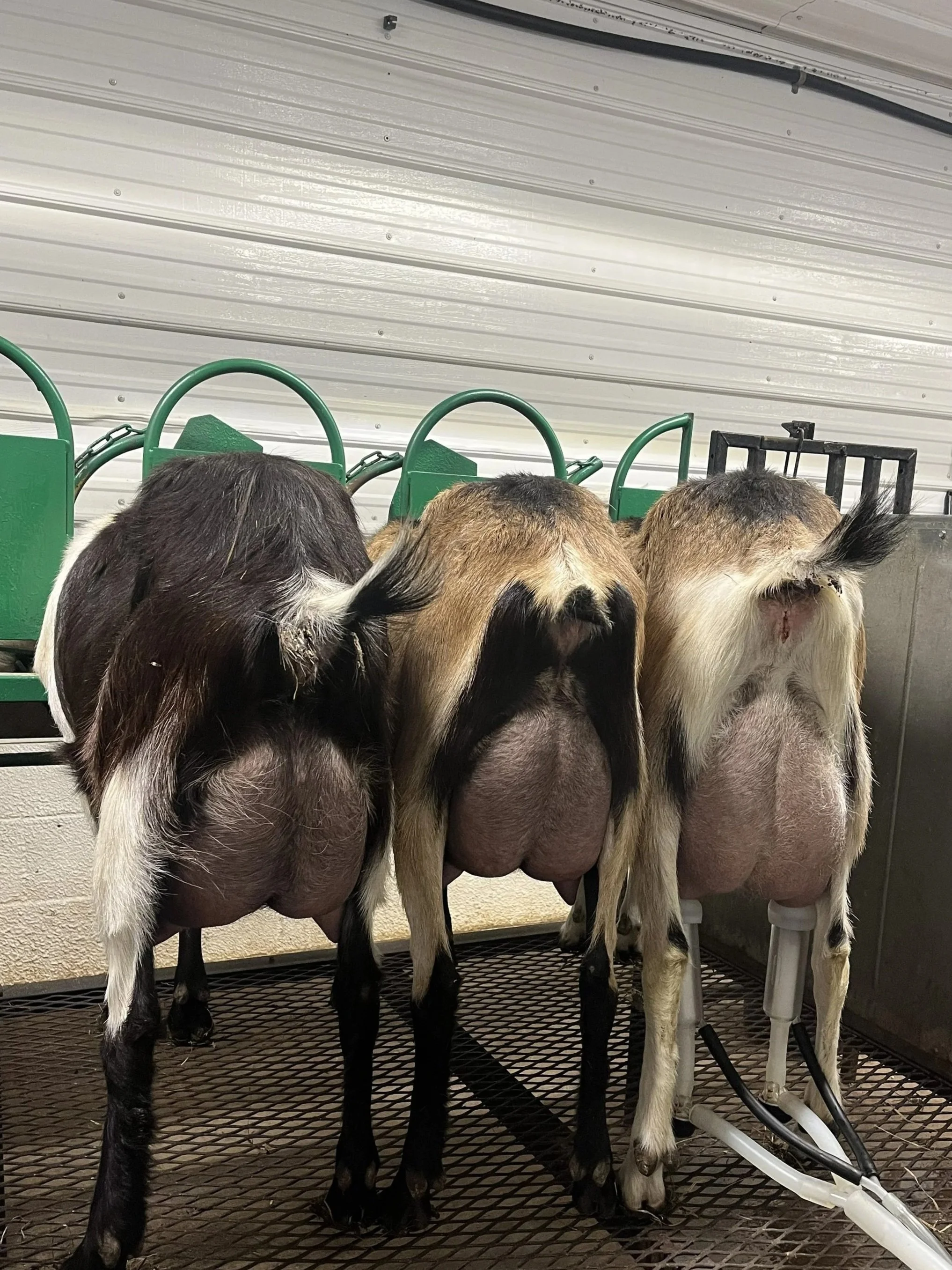
The days are flying by; one turns into another with the blink of an eye. There is so much life now, the farm flora and fauna are saying enough is enough, we are ready to come out of this cold dormancy. I spend my days in a futile effort to match the steadfast growth and energy of the land, while moving at about the pace of a raccoon that just had a grand buffet at the diner waste bin. I wasn’t prepared for the early morning milking routine, and the ever-growing list of things that need to be done. I stay in a positive frame of mind through all the early mornings and stress by telling myself I’m not going to have bad days anymore, and that picks me up. I can usually find a good laugh about something wherever I am, however tired I might be.
I am making cheese every 3 days and working on other projects in between. I narrowed the new lineup of heirloom cultured cheeses down to 3, and I am also making fresh chevre in foodservice style, 2 lb tubs. The aged, raw milk cheeses are coming along nicely. I had a little bit of black mold growing on some of the earlier batches, I suspect I did not have enough airflow, and it may have been too humid in the cave. I turned the rh down to 85 and put a fan on low speed to circulate air and dry the rinds out a little. I am working on a project with PennTap, a free energy assessment program run by the state. I hope to design an even more passive way of cooling and humidifying the cheese cave, because the current refrigeration system is getting old, and uses more electricity than I would like it to.
I have been obsessed lately with terroir, and specifically how to express terroir in these 3 cheeses that I am making. I created a spontaneous ferment with milk from 1 goat by letting the milk sit at 72 degrees for 2 days until it was a clean solid mass of yogurt like clabber. It smelled great, slightly yeasty, fresh cheese, not too acidic. I use that mother now to re-culture jars of boiled milk, similar to keeping a sourdough starter going. I put a teaspoon of the frozen mother culture into a fresh jar of boiled milk and let that sit for 24 hours at 72 degrees. What results is a jar of nice clabber to use as a cheese starter in place of the industrial freeze-dried cultures that 95% of the worlds cheese is made with. I know that it is working well because the tommes I am making are developing acidity almost too fast. I may have to dial down the amount of clabber I am using, I think 1-2% of total milk is a good amount. I know we have a good number of yeasts and geotrichum floating around the environment, and in the milk because the rinds are colonizing nicely and my whey buckets are developing a nice wrinkly surface after a couple days. I intend to start using the whey from my aged cheeses to make ricotta. It will be an extra couple hour in the cheese room, but I just can’t let all that good ricotta whey go out to pasture anymore. Stay tuned for more to come on that. I continue to search for more ways to create true terroir in our cheese. It is hard with a government who doesn’t want you doing these things. I would love to make my own rennet, and maybe there is a way. I would also love to use local salt, but the closest table salt company I can find is in West Virginia and it is probably to cost prohibitive to use. I intend to call them and see if they have wholesale pricing. I’ll keep working on making these cheeses taste like our place, it’s a life’s work and more but we need this kind of food now more than ever.
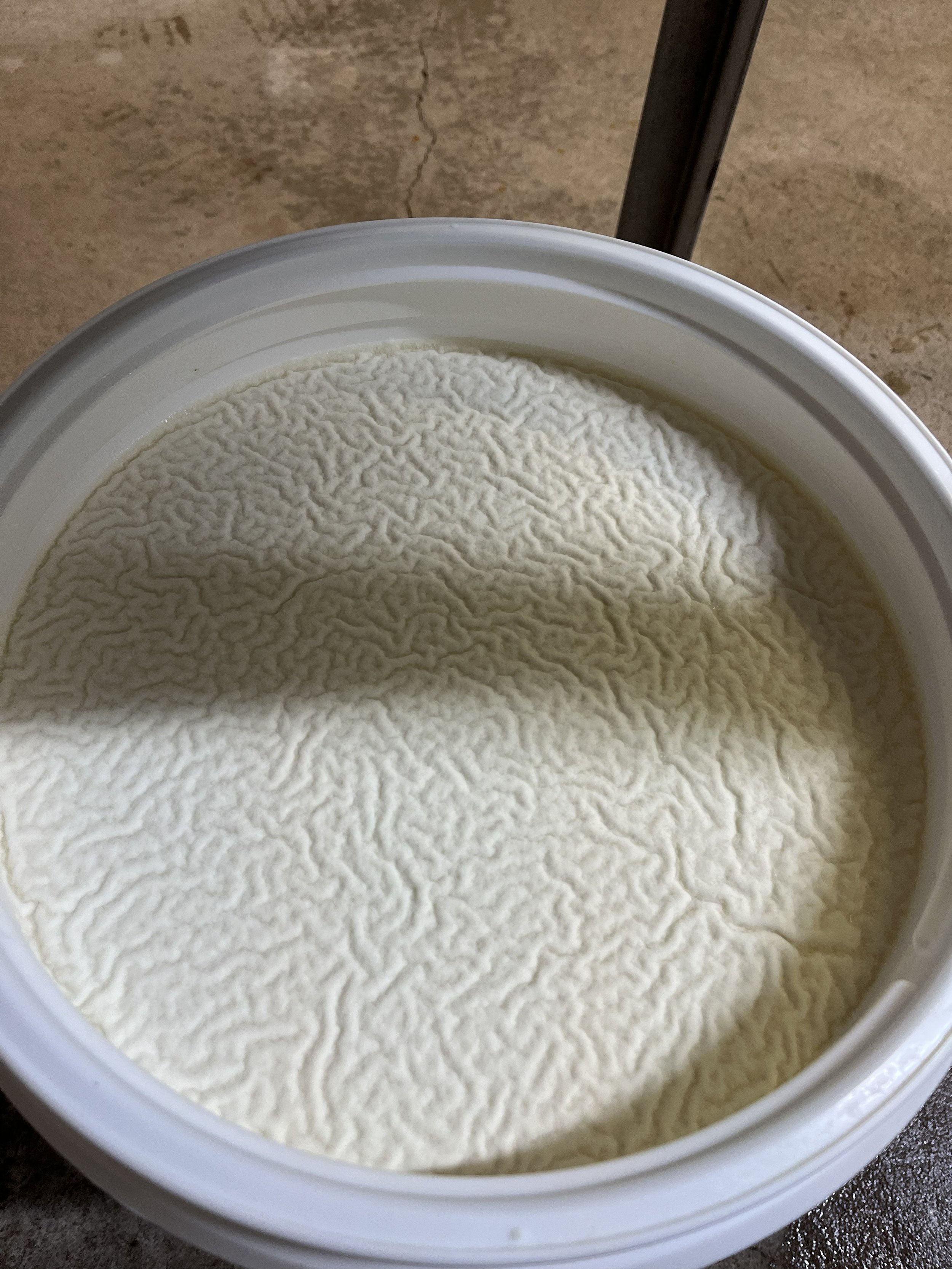
Bucket of whey with non-introduced geo-yeast film